Blogger Widgets
Showing posts with label Tech News. Show all posts

Samsung Galaxy S4 Active

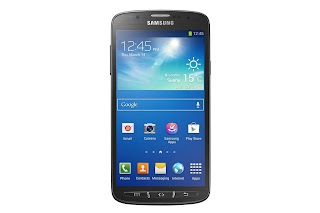
Samsung has made its Galaxy S4 Active Android smartphone official so here's the phone's release date and price information in the UK. See also: Samsung Galaxy S4 Active hands-on review.

After many a rumour, the Galaxy S4 Active has been announced by Samsung. The smartphone is a tougher, more durable version of the flagship Galaxy S4 and will be released initially in the US and Sweden this summer. No price has been detailed.

Samsung Galaxy S4 Active: Release date

As usual Samsung didn't announce a specific release date for the Galaxy S4 Active but online retailer Clove has confirmed that the smartphone will arrive on 1 July.

Samsung Galaxy S4 Active: Price in the UK

Samsung didn't announce a price for the S4 Active either but Clove has the handset listed for £488 inc VAT for the 16GB model in 'dive blue'.


"The Galaxy S4 Active is the newest addition to the Galaxy series and is purposefully designed for active users who love the outdoors," said JK Shin, CEO and President of IT & Mobile Communications at Samsung. "Samsung has taken the innovative features of the Galaxy S4 and added breakthrough protective design elements to create a device that thrives in an active environment and is built for a lifestyle of travel and exploration."

Samsung Galaxy S4 Active: Specs

The Galaxy S4 Active is similar to the Galaxy S4 in specification but offers a full sealed design comparable to the Sony Xperia Z's. The handset has an IP67 rating meaning it is dust and waterproof – up to 30 minutes at a depth of one meter. There's even a water-resistant headphone jack.

Like Samsung's flagship device, the Galaxy S4 Active has a 5in Full HD touchscreen (TFT rather than SuperAMOLED) and a 1.9GHz quad-core processor. However, it does have a downgraded rear camera – 8Mp compared to 13Mp.

The Galaxy S4 Active still comes with Android 4.2.2 Jelly Bean and software features found on the GS4 like Smart Scroll, Smart Pause, Air View and Air Gesture. It supports NFC, 11.ac Wi-Fi, and 4G LTE networks.

If it wasn't for the downgraded camera, the Galaxy S4 Active would be a better version of the Galaxy S4, albeit a chunkier version.


Read more

New Nexus 5 release

Google I/O has been and gone, with no mention of the new Nexus 5's release date or potential specs. We take a look at when the Nexus 5 will tip up and what it could offer.
The Nexus 5 could be the Google device to introduce the next version of Android, 5.0 Key Lime Pie. So naturally, we're keen to know what it will offer.
Although the Nexus 4 has issues with stock shortages, it's been well received and popular with punters. A high-end smartphone for £239 is a bargain even if it's a bit limited on storage. See also: iPhone 6 release date: When will Apple's next iPhone arrive?
Thoughts are turning to the Nexus 5 and what it has to offer to rival the likes of the Samsung Galaxy S4, Sony Xperia Z and HTC One. At the moment, it's LG which is supposedly manufacturing the Nexus 5 but Google is also considering other vendors.


New Nexus 5 release date

Google hasn't announced when the new Nexus 5 will be revealed, or even if it is making one but here are the rumours on when it will arrive.
The first possibility was that Google would announce the Nexus 5 at its Google I/O (input/output) developer conference which takes place in May in San Francisco. However, the event came and went with no Nexus 5 or even Android 5.0 Key Lime Pie.
At last year's Google I/O which took place in June, the firm unveiled the Nexus 7, its first tablet running Android 4.1 Jelly Bean. It seemed likely new hardware would be revealed at this year's conference but this wasn't the case - unless you include the Samsung Galaxy S4 Google Edition.
Google I/O 2013
Now Google I/O is in the past, it's likely that we'll see the new Nexus 5 arrive around a year after the Nexus 4, in October. The Galaxy Nexus was announced in November and the Nexus S in December.
New Nexus 5 specs

Rumoured specifications for the Nexus 5 include a Full HD screen either 5in or 5.2in in size, a Qualcomm Snapdragon 800 quad-core processor clocked at 2.3GHz and a whopping 3GB of RAM.
There's also been suggestion it will feature a 16Mp camera made by Nikon. Other sources suggest a smaller 4.5in screen with a 720p resolution.

Read more

Firefox OS- can it overcome other OS

iOS and Android are great, but they each have their own rules and policies that certainly inhibit the creative efforts of developers. Mozilla has since decided to build a new mobile operating system from scratch, one that will focus on true openness, freedom and user choice. It’s Firefox OS.

Firefox OS is built on Gonk, Gecko and Gaia software layers – for the rest of us, it means it is built on open source, and it carries web technologies such as HTML5 and CSS3.


Developers can create and debut web apps without the blockade of requirements set by app stores, and users could even customize the OS based on their needs. Currently the OS has made its debut on Android-compatible phones, and the impression so far, is great.

You can use the OS to do essential tasks you do on iOS or Android: calling friends, browsing web, taking photos, playing games, they are all possible on Firefox OS, set to rock the smartphone market.
Read more

Eye Tribe-slice with your eyes

Eye tracking has been actively discussed by technology enthusiasts throughout these years, but it’s really challenging to implement. But Eye Tribe actually did this. They successfully created the technology to allow you to control your tablet, play flight simulator, and even slice fruits in Fruit Ninja only with your eye movements.


It’s basically taking the common eye-tracking technology and combining it with a front-facing camera plus some serious computer-vision algorithm, and voila, fruit slicing done with the eyes! A live demo was done in LeWeb this year and we may actually be able to see it in in action in mobile devices in 2013.

Currently the company is still seeking partnership to bring this sci-fi tech into the consumer market but you and I know that this product is simply too awesome to fail.
Read more

Leap Motion -more than Motion Sensor

Multi-touch desktop is a (miserably) failed product due to the fact that hands could get very tired with prolonged use, but Leap Motion wants to challenge this dark area again with a more advanced idea. It lets you control the desktop with fingers, but without touching the screen.


It’s not your typical motion sensor, as Leap Motion allows you to scroll the web page, zoom in the map and photos, sign documentss and even play a first person shooter game with only hand and finger movements. The smooth reaction is the most crucial key point here. More importantly, you can own this future with just $70, a price of a premium PS3 game title!

If this device could completely work with Oculus Rift to simulate a real-time gaming experience, gaming is going to get a major make-over.


Read more

Form 1-3D printer

Just as the term suggests, 3D printing is the technology that could forge your digital design into a solid real-life product. It’s nothing new for the advanced mechanical industry, but a personal 3D printer is definitely a revolutionary idea.

Everybody can create their own physical product based on their custom design, and no approval needed from any giant manufacturer! Even the James Bond’s Aston Martin which was crashed in the movie was a 3D printed product!


Form 1 is one such personal 3D printer which can be yours at just $2799. It may sound like a high price but to have the luxury of getting producing your own prototypes, that’s a reaonable price.


Imagine a future where every individual professional has the capability to mass produce their own creative physical products without limitation. This is the future where personal productivity and creativity are maximized.
Read more

Oculus Rift-Virtual Gaming

Virtual Reality gaming is here in the form of Oculus Rift. This history-defining 3D headset lets you mentally feel that you are actually inside a video game. In the Rift’s virtual world, you could turn your head around with ultra-low latency to view the world in high resolution display.

There are premium products in the market that can do the same, but Rift wants you to enjoy the experience at only $300, and the package even comes as a development kit. This is the beginning of the revolution for next-generation gaming.


The timing is perfect as the world is currently bombarded with the virtual reality topic that could also be attributed to Sword Art Online, the anime series featuring the characters playing games in an entirely virtual world. While we’re getting there, it could take a few more years to reach that level of realism. Oculus Rift is our first step.
Read more

The Galaxy S4's Key Lime Pie problem

Samsung's latest flagship will have the newest version of Android -- for about two months.

The new Galaxy S4 features cutting edge hardware.
Too bad its operating system will be out of date about four weeks after the phone hits store shelves.
Samsung Electronics' latest phone, which will debut in April at the earliest, will run Android 4.2.2, also known as Jelly Bean. It's also the latest version of Android -- for now.
The problem is another version of Android, widely believed to be called Key Lime Pie, will likely make its debut at Google's I/O developer conference in May.
Read more

Microsoft to end Windows Phone 7.8 and 8 support in 2014

The company says that Windows Phone 8's support will end in July 2014, while Windows Phone 7.8 will continue to receive support until September.


Microsoft has put an end date on its support for Windows Phone 7.8 and Windows Phone 8.
The company's support page lists both operating systems, and says that Windows Phone 7.8 will be supported through September 9, 2014, while Windows Phone 8 will receive support through July 8, 2014.


The difference is based on Microsoft's life cycle start date and its decision to support platforms for 18 months. Microsoft pegs the Windows Phone 8 start date at December 14 and Windows Phone 7.8 at February 9.
Windows Phone 8 is the latest and most featured-packed version of Windows Phone. Windows Phone 7.8 was the option Microsoft offered to former Windows Phone 7 owners who didn't want to buy a new device. There's no clear upgrade path to Windows Phone 8 from Windows Phone 7, so Windows Phone 7.8 provides some, but not all, of the features in Microsoft's operating system.
That Microsoft is ending support for its latest operating systems next year isn't all that surprising. The mobile space is driven by rapid operating system updates. Apple, for example, launches a new version of iOS each year. And since most consumers update their devices every two years, needing to keep operating systems updated for several years doesn't make much sense.
Read more

iPhone 5S will bring back 'one more thing,' analyst says

On the heels of a Galaxy S4 release that was solid but not mind-blowing, word is that Apple is planning a killer software feature for the next iPhone.


Not wowed by the HTC One or Samsung Galaxy S4? One analyst says never fear -- Apple is preparing a killer feature for the iPhone 5S that will crush the notion that smartphones are becoming a commodity product like so many soybeans traded on the Chicago Mercantile Exchange (or smartypants similes on gadget blogs).
If you've been paying attention to the almost monthly march of big-time smartphone releases for the past year and a half, you may have noticed a pattern. Each new iPhone, Android flagship, and even the Lumia and BlackBerry, is faster, more powerful, and prettier than the last with a few gimmicky features that raise eyebrows for a few weeks, but no game-changing innovation.
For a few great glory years there, Apple was the company to count on for a great new killer feature in the form of Steve Jobs' infamous "one more thing." In fact, arguably the last time we were all abuzz with a groundbreaking new phone feature was when the iPhone 4S was introduced with Siri about a year and a half ago. And even Siri didn't end up quite catching fire and creating a nation of silly people talking to their phones all day.
But Katy Huberty -- who covers enterprise systems and PC hardware for Morgan Stanley and is a frequent Apple watcher -- says the smartphone renaissance isn't over just yet. Speaking on CNBC today, she said that while Apple (specifically its stock price) is in a bit of a funk, she predicts a comeback powered by some hot new software features on the next new iPhone:
You saw the Samsung Galaxy S4 come out last week, that shows you the innovation cards are up for grabs. What is lacking in (the S4) is a killer feature. We think that's where Apple will surprise this year. This (iPhone) 5S cycle this year will be about a killer feature that drives consumers increasingly to the platform...


OK, sounds good, but a quick reality check. If you're Apple and you're in a bit of a quiet period with a slumping stock price and your chief competitor has been bathing in headlines over its latest release for several days, it's pretty easy to simply put out the word that you're planning something non-specifically cool.
But it's also interesting that we seem to be talking about a software-based feature. Perhaps smartphone hardware is becoming more like those ubiquitous soybeans, carrying the same amount of diversity and excitement as a chunk of tofu.
Regardless, now the pressure is on Apple to dig deep and come up with something sweet. I'm rooting for some wicked smartphone karaoke software. What killer feature would you like to see in the next iPhone?
Read more

Motorola X-Phone

It likely won't be called Motorola X-Phone when the project hits the prime time, but the project is at least very much real. A job posting on Linked In advertised an "X-Phone" product manager.

Plenty of other rumors swirl around the suspected device, including one that the X-Phone may offer hardware choices that resemble the Droid Razr Maxx HD, suggests a PhoneArena source.
Newly tipped rumors include that it will have up to 128GB internal storage, a 3,000mAh or larger battery, and a Kevlar body. Expected as the first Android 5.0 Key Lime Pie device, the X-Phone could also boast a 4.8-inch display and a Sony Exmor camera sensor. It's worth noting that most of these new specs line up with last week's speculation of an unbreakable case, extended life battery, and wireless charging.


Read more

new HTC M4


Photos of the rumored HTC M4 surfaced earlier in the week, giving us a look at what may be in store for the midrange experience. As noted by HTC Source, the handset closely resembles an early mockup of the also-rumored HTC M7.
In a related note, Japanese tech blog Blog of Mobile (translate) pairs the same images with an HTC 603e. Expected to launch in China, the specifications mostly line up with previous M4 details.
One key difference would be the camera, which is listed at 5-megapixels. Early rumors tied the phone to a 13-megapixel camera, though a 5-megapixel shooter seems more likely for a midranger.


Other hardware for the M4 may include a 1.2GHz dual-core Snapdragon processor, a 4.3-inch 720p display, 16GB internal storage, and 2GB RAM. Powered by Android 4.2 Jelly Bean, the M4 is expected to feature a lighter Sense 5.0 interface.
Read more

Samsung Galaxy S4 latest news


The Samsung Galaxy S4 may offer touchless gestures for navigation and interfacing, reports Korea's DDaily (translate). Samsung will allegedly introduce an Amtel chip capable of understanding gestures within the range of the screen. The technology is not exactly new, as Sony employed it for the Sola smartphone, but we might expect Samsung to build this deeper into the custom user experience.


The most recent chatter around the Samsung Galaxy S4 indicates that it could debut as soon as March 15. Reported to boast a larger, 2,600mAh battery, the phone may hit Europe and Asia in April and the United States in May or June. We're keeping a watchful eye on this one and invite you to follow along at the Samsung Galaxy S4 rumor roundup.

An alleged image of the Samsung Galaxy S4 has found its way online, via SamMobile. Rumored to arrive sometime this spring, the photo shows a device that looks equal parts Samsung Galaxy S3 and Galaxy Premier. Considering the level of secrecy that shrouded the release of Samsung's current flagship phone, I would be very surprised if this is the real deal.
Read more

Adobe issues emergency update for Flash


Two previously unknown security holes prompt the company to issue an emergency update across all platforms.


Adobe issued an emergency update to its Flash Player to fix two zero-day threats, the company announced yesterday. The updates affect all versions of Flash on Windows, Mac, Linux, and Android.
The vulnerabilities currently are being exploited "in the wild," says Adobe's blog on the patches. According to the Kaspersky ThreatPost blog on the pair of zero-days, one attack targets "aerospace and other manufacturing companies" by tricking people into opening a Microsoft Word document with malicious Flash content embedded in it. The second zero-day targets Firefox and Safari on Mac OS X by tricking you into visiting Web sites hosting malicious Flash content, and it aims at Windows users by way of a Microsoft Word attachment delivered via e-mail.
Adobe listed on its blog the affected versions of Flash, and it recommended actions to take. Apple iOS is not affected, since it has never been compatible with Flash.


 Adobe recommends users update their product installations to the latest versions:

  • Users of Adobe Flash Player 11.5.502.146 and earlier versions for Windows and Macintosh should update to Adobe Flash Player 11.5.502.149.
  • Users of Adobe Flash Player 11.2.202.261 and earlier versions for Linux should update to Adobe Flash Player 11.2.202.262.
  • Flash Player installed with Google Chrome will automatically be updated to the latest Google Chrome version, which will include Adobe Flash Player 11.5.31.139 for Windows, Macintosh and Linux.
  • Flash Player installed with Internet Explorer 10 for Windows 8 will automatically be updated to the latest version of Internet Explorer 10, which will include Adobe Flash Player 11.3.379.14 for Windows.
  • Users of Adobe Flash Player 11.1.115.36 and earlier versions on Android 4.x devices should update to Adobe Flash Player 11.1.115.37.
  • Users of Adobe Flash Player 11.1.111.31 and earlier versions for Android 3.x and earlier versions should update to Flash Player 11.1.111.32.


Read more

here is the best mobile releases for 2013


Nearly half of all American adults now own a smartphone, and the innovation on display at CES showed just how far these devices have come. Handsets are getting thinner even as their screens are getting bigger, prices are coming down, and the threat of water damage is being conquered with new waterproofing technology. Read on for the most exciting smartphones unveiled at CES 2013.


Yota Phone: E-Paper Screen Shows Content on the Back


When we first heard about the Yota phone, a 4.3-inch Android phone with a grayscale e-Paper display on the back, we were puzzled but intrigued by the concept. But after seeing a working prototype at CES, we’re excited about the new range of use cases this second screen presents.The back screen can serve as an eReader, an always-present alert system or a post-it note for your digital life.

Sony Xperia Z 1080p: Smartphone Plays Music Underwater

The new Sony Xperia Z combines current superphone staples like a 5-inch, 1080p screen and quad-core Snapdragon S4 Pro processor with high-end imaging and the eye-catching ability to withstand being dunked in one meter of water for up to 30 minutes. It can even stream your favorite tunes to a nearby Bluetooth speaker while submerged. Add in a new stamina mode for improved standby time and easy one-touch sharing with NFC devices, and you have the winner of our Best of CES 2013 Smartphone Award.

Lenovo IdeaPhone K900: World’s First Intel Clover Trail Phone

Lenovo's IdeaPhone K900 is spearheaded by a 2-GHz Z2580 Intel Clover Trail processor, making it the first dual-core powered smartphone from the chip giant. With its 5.5-inch, 1080p display, it enters phablet territory yet still manages to stay slim at just 6.9mm thick.


Huawei Ascend Mate: World’s Biggest Screen and Battery

The Huawei Ascend Mate is so big that we had to step back to fit it in the frame when shooting this phablet at CES 2013. At 6.1 inches, the Mate (coming to China in February and other markets thereafter) makes the iPhone 5 look like a Tic-Tac. Equally large and in charge is its 4050mAh battery. Huawei says the Ascend Mate should last for 14 hours of Web surfing, compared to 11.5 hours for the Samsung Galaxy Note II.

Pantech Discover: A Big-Screen Phone for the Masses


Big-screen phones used to be the sole domain of top-tier manufacturers like HTC and Samsung, but Pantech is flipping that paradigm on its head with its new 4.8-inch Discover. The Discover is about as budget-friendly as a smartphone can get, with a 1.5GHz dual-core Qualcomm MSM 8960 processor and 1GB of RAM for only $49.99 on a two-year contract.

Huawei Ascend D2: Crazy-High PPI, Shrugs Off Water

Huawei’s Ascend Mate is getting all the attention because it has a ginormous 6.1-inch display, but to us the Ascend D2 looks like the better of the two phones. Why? Because it crams 1080p resolution into a 5-inch display, giving this phone a crazy high 443 DPI. That’s higher than the iPhone 5 (326) and most Android handsets. This combined with attractive features like IPX water resistance, a 3000mAh battery and a 5-MP camera makes the Ascend D2 a highly competitive smartphone.


Alcatel One Touch Idol Ultra: World’s Thinnest, Lightest Smartphones


Alcatel unveiled a slew of products at CES 2013, starting with the One Touch Idol Ultra. Weighing a barely-there 4.1 ounces and measuring 5.29 x 2.7 x 0.25 inches, Alcatel says the Ultra is currently the world’s slimmest smartphone, beating out the iPhone 5's 0.3 inches. The Idol Ultra also boasts a 4.7-inch AMOLED display, a 1.2-GHz dual-core processor and 1GB of RAM and runs on Android 4.1 (Jelly Bean). A 1.3-megapixel front-facing camera and 8-MP rear camera round out the specs.
Read more

apple targets with a ring-new idea from apple developers


People are crazy about ipod, so this iRing concept I believe could be seen in the future. Using this ring, iPod fans can take control of their music player easier, not just for iPod btw, this ring is mend to control all Apple’s Product. Take a look at its stylish design and wireless Bluetooth connectivity with your iPod and iPhone, the iRing allows you to control playback and volume on any of your Apple media devices. iRing features a bright OLED status display with a touch-sensitive function strip, and a rechargeable battery life of up to 2 days.


 USB powered help you conveniently recharge your iRing. Its minimal size and unique ring-lock mechanism make it an ideal companion for charging and storing your iRing.


Read more

HTC-made au Infobar A02 launches in Japan, wraps unique Android UI in trippy body


KDDI's funky au Infobar is back! Once again designed by the famed Naoto Fukasawa, this A02 -- co-developed by HTC -- brings the series up to date with Qualcomm's 1.5GHz quad-core APQ8064 (but with just 1GB of RAM), 4.7-inch 720p display, 16GB of storage, microSD slot, 2,100mAh battery, LTE radio (800/1500) and Android 4.1. Better yet, this phone also supports both CDMA2000 800/2100 and WCDMA 850/1900/2100, making it a great global phone. Judging by one of the demo clips after the break, it seems that this Infobar's 8-megapixel main imager (with F2.0 lens) and 2.1-megapixel front-facing camera take advantage of HTC's ImageSense chip for speedy burst shots. Likewise, you'll find Beats Audio built into the system. As per typical Japanese mobile phone, the usual NFC (with Osaifu-Keitai mobile wallet), 1seg TV tuner and infrared are also packed inside the 9.7mm-thick, 147g-heavy waterproof (IPX5 and IPX7) and dustproof (IP5X) body.

We're already fans of the iconic nishikigoi (meaning "brocaded carp") color scheme as pictured above, but what really caught our attention this time are the fluid animations and uniqueness of the "iida UI" 2.0 (iida stands for "innovation," "imagination," "design" and "art") by interactive designer Yugo Nakamura. As you'll see in the video clips after the break, the home screen here shares some similarities with Windows Phone 8's counterpart -- in the way items snap to grid and resize, even though the former is enhanced by plenty of bouncy animation, more colors and funny sounds (designed by Japanese musician Cornelius). Expect this A02 -- which is also available in blue or gray -- to hit the Japanese market in mid-February.
Read more

Sony announces touch-enabled VAIO T15 Ultrabook with touch, new touch-enabled VAIO T14


When Sony announced the touch-enabled VAIO T14 and the new VAIO T15 Ultrabooks yesterday, we lamented the lack of specs and, well, any concrete info apart from the fact that these machines exist and will make it to market. The silence on the processor front makes sense, but we were hungry for more details all the same. Lucky for us, we spotted both models on the show floor this morning at CES.

The new 15-inch T15 is the largest VAIO Ultrabook to date, and it doesn't depart from the silver, brushed-metal aesthetic we've seen on Sony's ultraportables dating back to the T13. It's considerably heftier than the 13- and 14-inch models, but it does squeeze in an optical drive. Overall, its port selection is quite generous: USB 3.0, an Ethernet jack, VGA, HDMI and a headphone connection line the left side, while the right edge is home to that disc drive along with two USB 2.0 ports. The 10-point capacitive touchscreen seems quite responsive, and the 1080p resolution is a nice step up from the more standard 1,366 x 768 configuration on the T14. As mentioned previously, additional specs and pricing / availability info are TBA, but it's safe to bet that the VAIO T15 will be available with both SSD and standard hard drive options when it hits the market.


As it happens, the 14-inch T14 was also on hand. The main difference here is the added touch display. Otherwise, it's the 3.77-pounder we've known about since October. As with the T15, we're waiting on more concrete info. For now, you can get a taste of the two machines in our hands-on video and galleries.

sources:http://www.engadget.com/2013/01/08/hands-on-with-sony-vaio-t15-touch-t14/
Read more

This is why Nvidia’s Shield will fail


At CES this year, Nvidia announced something a bit unexpected — a handheld Android gaming console. Rather than just a phone, the Shield is reminiscent of an Xbox 360 controller, but with a clamshell-style screen that folds out on top. It’s an actual handheld unit, rather than some controller attachment. Out of all the recent dedicated Android gaming devices — such as the Ouya or the GameStick — the Shield is not only backed by the developer with the most prestigious reputation out of the bunch, but is the only handheld device. However, it’s still just another Android gaming console that plays the same games as the other ones, and that is the biggest reason why the Shield will most likely fail.

First off, it’s worth noting that the Shield is actually a decent piece of hardware. It sports a Tegra 4 SoC (with its 72-core GPU), an integrated 5-inch, 720p display that flips up off the controls, reportedly strong speakers, HDMI out so you can plug it into a bigger display, around five to ten hours of gaming battery life, and a standard amount of buttons found on modern dedicated gaming handheld devices. The unit also features a USB port, audio out, and a micro SD slot. It will also have access to the Android Play store, which is where you will be able to download games from.

In short, the Shield has all the hardware we’d ask for from a modern-day handheld — but really, we’ve come a long, long way since the Game Boy Advance, and a decent hardware spec is usually a given nowadays. The hardware seems legit, but as we’ve learnt from eight generations of video game consoles, hardware isn’t the sole decider of a console’s success. The fate of the Shield seems to lie with its intent.


The reason why Sony, Microsoft, Nintendo, Valve (with Steam), and Apple (with iOS) have carved out their own large portions of the gaming market is because they all offer something competent you can’t get anywhere else. Sony and (to a lesser extent, considering the ports to PC) Microsoft have its own exclusives, Nintendo is practically built on exclusives (whether it be franchises or wacky hardware), and iOS not only offers exclusives, but is the platform on which the most popular games initially release. Though Android is fragmented in terms of both the spread of its operating systems and hardware on which they’re installed, it’s not like the OS can’t run games — for instance, there have been multiple Humble Bundles loaded with Android games, and top-tier games at that.

Nvidia’s Shield has a rough road ahead because it already has too much competition. The Ouya, which already shipped its dev kits and is well on its way to a consumer release, only costs $99. The GameStick is $20 less than the Ouya, and the console fits right inside its own controller. Both units offer a controller, though neither offer portable gaming.

How big are your pockets?

Android phones are portable, and can run the same games the Shield can — but your smartphone obviously doesn’t provide a standard gamepad layout that games can target. However, because the Shield can’t make calls, you’ll still have to carry around your phone — a device on which you can already (most likely) play the same games. Users will be forced to make the choice between a unit with more comprehensive features, or one that lets you use a controller to play games that weren’t designed with a controller in mind. We don’t even know if the Shield will fit in your pocket: It looks rather chunky to me.

Sure, considering the Ouya and GameStick are on the horizon as well, game developers could begin creating worthwhile Android games with a controller in mind, but they would only do that if they knew it would be profitable — and that leads us to the catch-22 of trying to open up a new market. Developers generally won’t develop something if it won’t return any profit, so they need a large enough install base of gamers to buy their products; however, a large enough install base of gamers generally won’t adopt a console if there aren’t guaranteed products they want.

If you’re wondering why the Ouya and GameStick aren’t being judged the same way, that’s because they shouldn’t be judged the same way. They’re two crowdfunded, fairly simple (and thus cheap) indie projects. Though we haven’t heard mention of a price for the Shield yet, considering the hardware packed under (and above!) the hood, Nvidia will most likely have to eat a significant sum of money to price it competitively.

The dedicated Android gaming console is an awesome product in theory, but its success will ultimately boil down to what the success of all gaming consoles boils down to, and that’s the games. With Android games — so far, at least — you can get them across multiple devices, and some of those devices offer more functionality than a dedicated gaming unit would. If the Shield wants to succeed, Nvidia needs to get some impactful exclusives pretty quickly, or else people will most likely continue playing Game Dev Story on their phone like they’ve been doing all along.
Read more

Nokia Gives 3D Printers Something Fun to Do


Nokia on Friday released a 3D printing kit that will allow users to create their own custom cases for the Lumia 820. The handset, which was unveiled last September, features a removable shell case that lets users change the color of their phone or even enable options such as wireless charging.


Now Nokia has taken things a step farther. It is allowing users to customize their phone via a special 3D printing kit. The 3DK is the first such accessory from a major handset manufacturer. Although the market penetration for 3D printers is still in its infancy, this is a way for Nokia, a once-dominant player in the handset arena, to regain the spotlight for doing something different.

"This is very much a marketing initiative," said Ian Fogg, senior principal analyst and head of the IHS mobile sector at IHS iSuppli. This is about getting column inches and getting Nokia talked about in the media."

Nokia did not respond to our request for further details.

Cutting-Edge Props

Even prior to the widespread adoption of mobile smartphones, the handset has been very much a way of showing off some individuality. Primarily this has been through the production of cases, which has grown from a cottage industry to a major market.

Is Nokia killing the cash cow by allowing users to create cases with a printer?

"The reason this is very much a marketing initiative is that Nokia knows accessories have good margins," Fogg told TechNewsWorld.

"Nokia doesn't want to sacrifice that market, and they know 3D printing is a niche market," he explained. "Few people own 3D printers at home, so it won't cannibalize the accessories businesses at all."

It could also help reaffirm that Nokia is still very much on the cutting edge -- even beating Apple with something that could have users thinking and reacting differently.

"Nokia wants and needs to reposition themselves as tech leaders, and this appeals to thought leaders and first adopters," said Glen Hiemstra of Futurist.com. "It will create buzz in the maker community."

Custom Case

The fact that Nokia -- not Apple -- is embracing this technology goes back to Nokia's roots in providing some variety to mobile phone owners.

"Nokia's old advantage was they were the one company that seemed to get that folks didn't want to have identical phones and theirs were designed to have their appearance changed by users," said Rob Enderle, principal analyst at the Enderle Group. "This would be particularly important if you were competing against a one-size/look-fits-all strategy like Apple has."

There have been many ways to create individualized phone cases, but much of this has resulted in increasing the footprint of the handset in the processes. Nokia could change that.

"It could differentiate Nokia from most handsets on the market," said Fogg. "Instead of customizing the handset, you are actually customizing the casing -- and this isn't adding any bulk or heft to the phone."


Future of 3D

The other notable part of this is that 3D has been a dud as a visual technology, in that consumers aren't liking what they see on a TV screen. However, having a 3D printer to play with could be much more inviting. To date, 3D printers have been expensive, though.

MarkerBot unveiled a 3D printer in September that cost nearly US$2,200, but as with many technologies the price is likely to fall. For people to get excited about adopting the technology, there need to be products worth printing -- and the 3DK could nicely fill that void.

"Nokia sees the future coming, and this is a recognition that 3D printing is on the way to being commercially viable for custom products," added Hiemstra.

This could also be an experiment in the tradition of preferring fast failure over being too cautious, Hiemstra told TechNewsWorld, "a charge [Nokia has] been prone to -- but small risk, pretty big reward."

Of course, for this technology to take root will require that drop in price, but that should happen over time, and 3D printing could be a big game-changing moment -- one that starts now.

"This is likely the future of customization, and it will only be a matter of time before someone figures out how to get the price down so you can have a 3D printer in your home that can customize a lot of stuff ," noted Enderle. "This clearly brings 3D printing one more big step into the mainstream.
Read more